
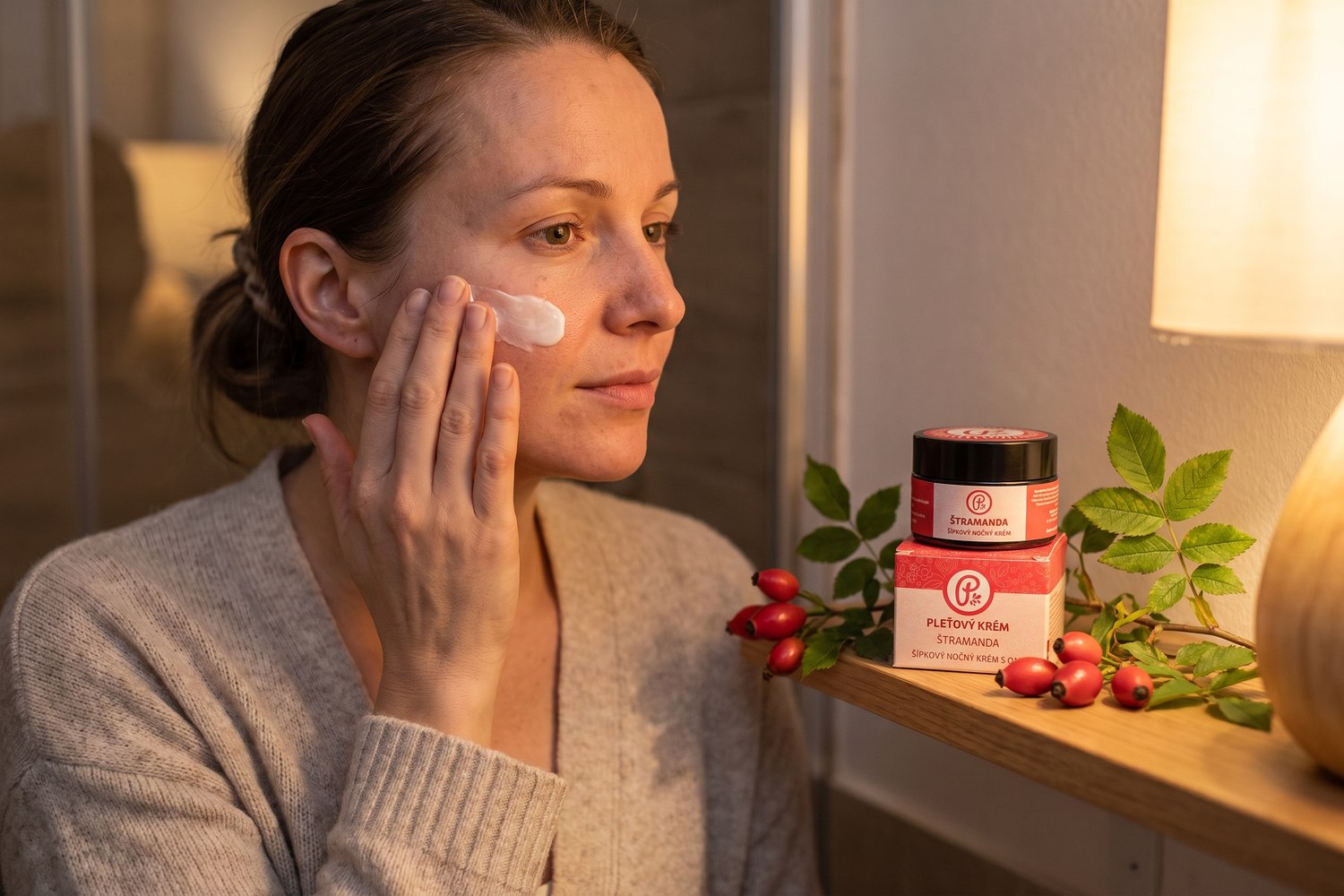
Dry skin on the face means your skin lacks enough natural lipids or moisture, and it shows as tightness, a dull look and tiny flakes, especially around the nose and on the cheeks. The way to soften it is gentle cleansing, a serum that binds water and a richer cream or face oil that seals it in. If you are looking for cosmetics for dry skin, take a look at the ZA KÝBEL KRÁSY almond day cream or the ŠTRAMANDA rosehip night cream, or let our Advisor guide you.
Dry or dehydrated skin? The difference that changes your choice of cream
These two terms are often mixed up, yet the skin needs something different in each case. Dry skin is a long-term skin type that produces less sebum, and so it lacks lipids, that is, the fats that form the protective layer and keep moisture inside. Dehydrated skin is more of a state in which the skin lacks water, and it can appear in women with oily skin too, for example after winter in an overheated room. In practice they often occur together. You can make a first guess from the table below, but watching your skin for a few days will help more precisely. If the skin shines and tightens at the same time, it is more likely a lack of moisture. If it is long-term rough and flaky, it lacks mainly lipids.
| Sign | Lack of lipids (dry skin) | Lack of moisture (dehydrated skin) |
|---|---|---|
| Duration | Stays with you long term | Comes and goes, often with the season |
| Look | Rough surface, fine flakes | Dull tone, fine shallow lines, sometimes shine as well |
| What helps | Oils, butters, squalane | Glycerin, hyaluronic acid and a cream on top |
Why dry skin on your face appears
The face is exposed to wind, sun, heating and daily washing, so its protective layer wears down faster than elsewhere on the body. On top of the naturally lower sebum production, which deepens with age, come habits that strengthen dryness: hot water, strongly foaming gels, alcohol toners and peels that are too frequent. The skin then loses lipids faster than it can replace them, and feels tight, flaky and less pleasant to the touch. Dry air in the office or a car with air conditioning can have the same effect. The role of creams in the care of dry skin is also discussed in studies on moisturisers and emollients (source: the PubMed database). If your skin asks for more attention, it is not a weakness, just a signal that it needs to slow down.
Three layers of care: bind, soften, seal
Well-built care for dry skin on the face works in three steps that complement one another. The first is ingredients that bind moisture, for example glycerin or hyaluronic acid. The second is ingredients that soften the skin and replenish lipids, such as plant oils and squalane. The third is richer substances that help keep moisture in, such as shea butter. The ZA KÝBEL KRÁSY almond day cream is built on almond oil and blackcurrant seed oil, rose water, hyaluronic acid and niacinamide. For the night a richer ŠTRAMANDA rosehip night cream suits, with shea butter, rosehip oil, squalane and coenzyme Q10. What exactly your skin needs may differ, so always read the composition. For the day cream the manufacturer’s warning also applies that it should not be used on irritated skin, and it is good to try a new product first on a small area.
- Bind moisture: glycerin, hyaluronic acid, rose water.
- Soften and replenish lipids: almond oil, rosehip oil, squalane.
- Seal and protect: shea butter and richer night balms.
Dry face cream or face oil: how to choose
For extremely dry skin on the face, one product is rarely enough; layers work best. Under the cream, a water-based serum with hyaluronic acid such as HYA CICA highly hydrating hyaluronic acid serum brings moisture. On top, a richer dry face cream or a balm replenishes lipids. If your skin still feels tight in the evening, finish with a few drops of a face oil for dry skin, for example Kopaničiarska žehlička® facial oil serum, which you warm in your palms and press gently into the skin as the last step. Choose a lighter texture in the morning and a richer one at night, and add one product at a time so you can see what your skin likes.

A routine for dry skin, morning and evening
Skin that lacks lipids needs above all calm and hydration in the right order. In the morning rinse it with lukewarm water, apply a serum to still-damp skin and then a day cream that locks the moisture in. In the evening remove make-up with an oil or balm that does not dry the skin out, and apply a richer cream to clean skin. Once or twice a week you can enjoy a more nourishing mask if it suits you, and in winter add a little more cream. For most women the improvement shows mainly in a feeling of softness, not in a miraculous change overnight. If you are also sensitive, read the article on sensitive skin, and if dryness accompanies you after forty, take a look at the text on mature skin. You will also find a general overview in the article Dry skin: how to care for it properly.
- Morning: lukewarm water, serum on damp skin, day cream.
- Evening: oil cleansing, lukewarm water, richer cream or balm.
- Once or twice a week: a more nourishing mask according to the label.
What to avoid with dry skin
With dry skin on the face, what you leave out helps more than what you add. Hot water is the most common reason skin feels tight after a shower, so stay with lukewarm. Strongly foaming cleansing gels take away even the lipids the skin has left, and handle alcohol toners, coarse scrubs and brushes with the same care. Never pick off flakes with your fingers; it irritates the skin and leaves it rougher than before. Instead give them cream, calm and a little time until they loosen on their own. Notice, too, whether your cleansing is needlessly thorough: skin that squeaks after washing is not cleaner, only stripped of its protective layer. If dry skin on the face repeatedly shows itching, cracking or redness, that is already a reason to consult a doctor or dermatologist.
Did you know…
Did you know that dry skin suffers from a lack of lipids, whereas dehydrated skin suffers from a lack of water, and so even skin that shines can be dehydrated?