
Glowing skin is skin that reflects light evenly, because it has a smooth surface, enough moisture and an even tone. It does not depend on age or on one miracle product, but on the sum of small things. If you would like to brighten a dull look, have a look at the Panakeia face serums, for example the BÁTHORYČKA brightening serum or the morning LONGEVITY LUMI-4. Not sure where to start? Try the Advisor.
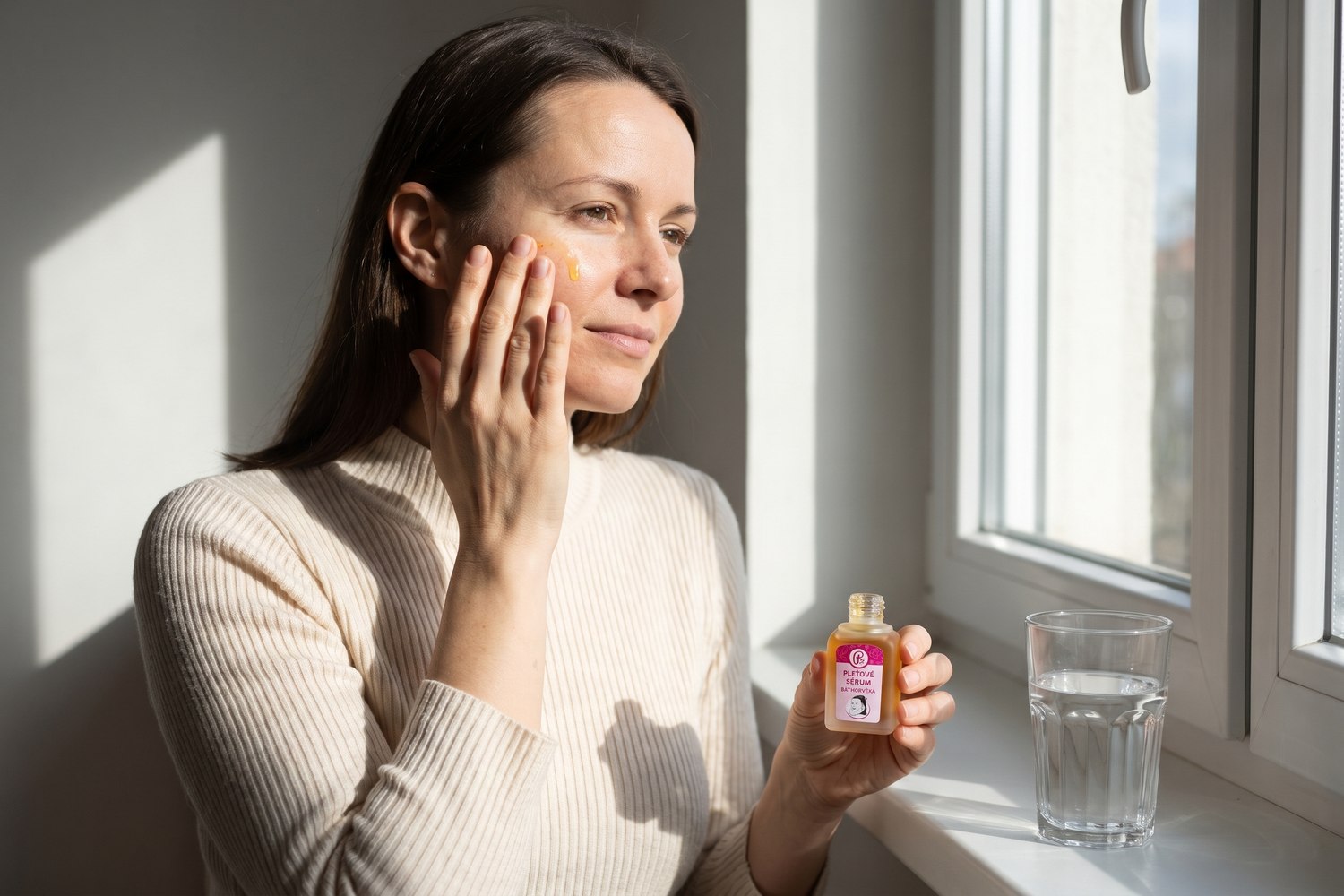
What is glowing skin and why dull skin loses its radiance
The glow of skin is not oil on the surface or glitter. It is light that bounces off a smooth, well-moisturised surface and comes back to you softly diffused. When tiny dry flakes gather on the skin, one next to another, the light scatters sideways and the skin looks greyer, even if it is perfectly healthy. It looks similar when it lacks water: the surface turns rough and the glow disappears. Add an uneven tone after summer or after a breakout, and in the morning you feel that your skin has not quite "woken up" yet. The good news is that you can influence most of this calmly, without anything aggressive. Glowing skin does not come from exfoliating every other day, but from alternating moisture, gentle removal of dry flakes and a break from the things that irritate it. First, let's look at why it dulls in the first place.
Why skin does not glow: four reasons to spot in the mirror
Stand by a window in daylight, without make-up, and look at your face up close, then from the side. It is not a scientific test, just a little help that shows you whether the problem lies in texture, moisture or tone. Everything looks different under a bathroom bulb, so do not trust it. Usually two reasons stand behind a dull look at the same time, rarely just one. Try to name them before you reach for a new product: you will save money and nerves, and if glowing skin does not arrive after the first attempt, you will at least know where to look next. The list below is not a diagnosis, only a map to start from.
- surface: tiny dry flakes, the skin looks grainy and the light scatters,
- moisture: it feels tight after washing and you see fine dehydration lines on your cheeks or under your eyes,
- tone: a yellowish cast or darker areas after summer or after a breakout,
- irritation: the skin is red and tired because hot water, fragrance or scrubbing irritates it.
If the irritation keeps coming back, stings or persists, speak to a doctor or dermatologist. Cosmetics do not replace an examination.
How to bring the glow back gently, not by force
The first step is often moisture, not exfoliation. Skin that lacks water first needs ingredients that bind water, for example glycerin or hyaluronic acid (listed as Sodium Hyaluronate). Gentle removal of dry flakes comes only when the surface feels comfortable and if your skin tolerates it. You can find what suits you in the text on choosing an exfoliator. Always follow the label for frequency and do not increase it on your own. Take your time when applying: slow strokes with your palms turn a few drops into a small ritual rather than a duty. Lukewarm water instead of hot helps. Press your skin with a soft towel rather than rubbing it. Three reliable steps will take you further than ten that you remember for two days.

What to look for in the ingredients of brightening cosmetics
With serums that promise brightening, the same ingredients appear most often. The table shows you how to recognise them in the INCI and where you can find them in products whose composition is verified directly on the product page.
| INCI name | What it is | Where to find it |
|---|---|---|
| Tetrahexyldecyl Ascorbate | an oil-soluble vitamin C derivative | BÁTHORYČKA, LUMI-4 |
| Sodium Ascorbyl Phosphate | a water-soluble vitamin C derivative | LUMI-4 |
| Niacinamide | vitamin B3 | LUMI-4 |
| Astaxanthin | a carotenoid obtained from algae | BÁTHORYČKA |
| Glycyrrhiza Glabra Root Extract | liquorice root extract | LUMI-4 |
In cosmetics, vitamin C is used mainly in the form of derivatives, because pure ascorbic acid is unstable in air. The forms of vitamin C are also covered in the text on vitamin C serum. If you are interested in the research, there are studies on vitamin C on the skin, source PubMed. LUMI-4 is a light milky emulsion for the morning that layers well under a day cream. BÁTHORYČKA is an oil serum with a content of 15 ml, and in its composition you will find squalane, sesame and sunflower oil and pomegranate. Watch out for fragrance: it contains myrrh and frankincense oil and Limonene, which the manufacturer lists as a fragrance allergen. If you react to fragrance, read the INCI before you buy. Try a new serum first on a small area of skin and use it according to the label.
A morning routine for skin that wants to glow
The evening gives your skin time to rest, the morning gives it radiance. That is when a light layer that absorbs well under your cream suits best, along with a short routine you can manage even on a Monday at seven. Let the serum sink in until your skin has taken it, and only then add your day cream. If your skin is more sensitive, introduce a new product gradually, one at a time, and watch for a few days how it behaves. After the night, skin is often slightly tight, so serum is nicer to apply on slightly damp skin and the cream spreads more easily over it. You do not need seven steps. A few slow touches and a moment of attention to what your skin tells you in the morning are enough. Glowing skin cannot be forced, it is kept up a little every day.
- Rinse your face with lukewarm water or cleanse it gently, without scrubbing.
- On still slightly damp skin, apply the serum according to the label.
- Let it sink in and add your day cream.
- In the evening, remove make-up gently and introduce new active ingredients one at a time.
Did you know…
Did you know that vitamin C often hides in cosmetics under names such as Tetrahexyldecyl Ascorbate or Sodium Ascorbyl Phosphate, and that you will only find them in the INCI list on the label?