
The best hand cream is the one that suits your skin, your day and the moment you reach for it. Your hands meet water, soap, cold air and a keyboard many times a day, so a good choice depends not on fashion but on texture, ingredients and the situation in which you will use it. Below you will find how to choose a hand cream by texture, how to read its label and how to make it a small daily ritual. If you are looking for a light creamy version, take a look at the Hand cream 100ml or the whole hand creams category.
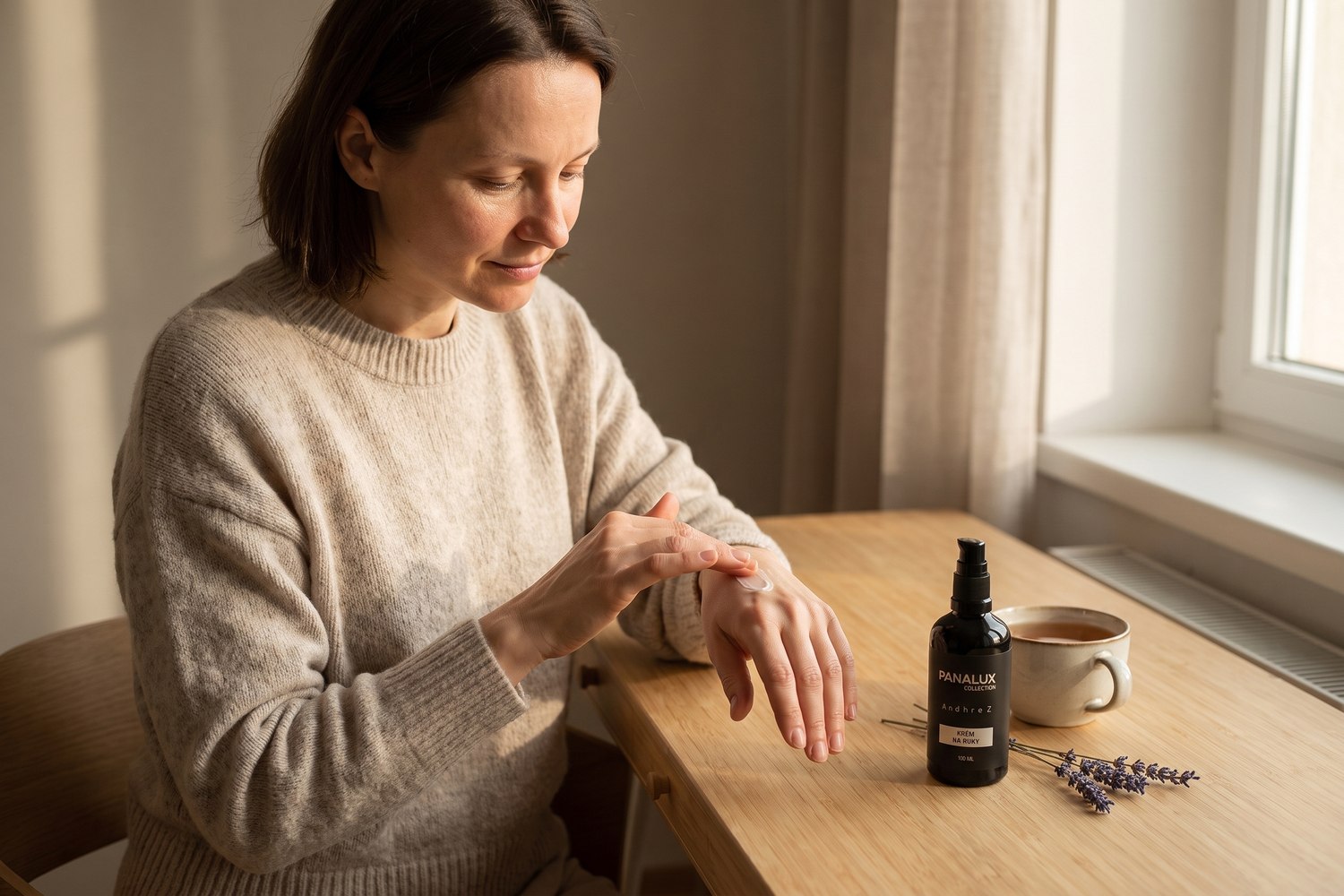
Why do hands need their own cream, and is body lotion not enough?
Palms have no sebaceous glands at all and the backs of the hands have few, so the skin produces only a small amount of the fat that softens it naturally. You also wash your hands several times a day, soap removes part of the natural fats from the surface, and cold or dry air strengthens that tight feeling further. That is why a cream intended for hands has a different job than body lotion: it is applied repeatedly, must not stick to your phone or to paper, and should soften the skin without sending you back to the sink after an hour. For this reason, when choosing one, ask not only about the composition but also how it will feel when you work, eat and type.
How to choose the best hand cream for you: three textures
Texture decides how often you will want to use it. A light cream is applied during the day, a richer balm belongs to the evening, and a solid cream goes into a handbag, where it will not spill. The table shows what the individual types usually consist of and when they suit. There is no single right cream, but there is a right combination, for example a light version on the desk at work and a richer one by the bed. Many women find that a pair suits them best, one texture for the day and the other for the night. If you are not sure, start with the lighter texture and after a week ask yourself whether it is enough or whether you would welcome a richer layer over winter.
| Texture | What it usually consists of | When it suits | What to watch for |
|---|---|---|---|
| Light cream | water, plant oil, glycerin | during the day, when working with a phone and keyboard | needs applying more often |
| Richer balm | butters, waxes, oils | at night and in the colder months | leaves a more visible film on the skin |
| Solid cream | butters and wax without water | for a handbag and for travel | softens at high temperatures |
How to read the ingredients of a hand cream?
Ingredients are listed on the label from the highest share to the lowest, so the first three tell you the most about texture. If water or floral water comes first, it is a light emulsion; if butters and waxes, a richer balm. In the Hand cream 100ml the list begins with Aqua, Rosa Damascena Flower Water and Helianthus Annuus Seed Oil, that is, water, rose water and sunflower oil, followed by Glycerin and Sodium Hyaluronate and Avena Sativa Kernel Flour, oat flour, which the product description names as colloidal oatmeal. Only at the end of the list is Parfum, with scent components such as Limonene, Linalool and Geraniol, which the regulation requires to be listed separately. If you do not look for fragrance, look for a shorter end to the list.
- Water or floral water in the first places means a light texture.
- Butter, wax or oil in the first places means a richer film.
- Glycerin and Sodium Hyaluronate bind water in the surface layers.
- You will find Parfum and fragrance allergens at the end of the list.

When and how to apply hand cream?
The best cream is the one you really use, so keep it where hands get washed: by the sink, at your desk and by the bed. You can apply it after every hand wash while the skin is still slightly damp, paying attention to the backs of the hands, the spaces between the fingers and the area around the nails. At night you can use a thicker layer and put on cotton gloves so the trace of cream does not transfer to the bed linen. The area around the nails and the cuticles will also appreciate a separate nourishing nail and cuticle oil. The cream thus becomes a small ritual, a moment of slowing down in the middle of a busy day, and the skin of your hands gets used to regularity. You will always find the exact amount and way of use on the label.
What a hand cream can and cannot do
This type of cream is a cosmetic, and so it softens, gives the skin a feeling of comfort and smells pleasant. It will not, however, replace a medical examination or a professional assessment if your hands trouble you for a long time. If the skin of your hands burns, itches, cracks until it bleeds or a rash appears over the long term, do not look for another cream but consult a doctor or dermatologist, who will assess what is going on. A change of habit sometimes helps more than another product, so try changing the gloves for washing up, the water temperature or the order of steps. You will find more about everyday hand care in the article What proper hand care should look like, and you can read about how skin behaves with washing in studies on protecting hand skin during frequent washing.
Did you know…
Did you know that ingredients on the label are listed from the highest share to the lowest, so the first three tell you the most about a cream’s texture?