
A moisturising face cream is a face cream that helps keep water in the surface layers of the skin and forms a delicate film so the water does not evaporate. It is not only for dry skin; oily and combination skin need hydration too. If you are looking for a lighter or a richer version, take a look at the Štefka day cream, the Za kýbel krásy cream or the day creams category, or let the Advisor guide you.
How does hydration differ from nourishing the skin?
Hydration means giving the skin water and helping it keep it; nourishment means giving the skin fats and fatty substances that soften the surface. Dry skin is a skin type that has little fat. Dehydrated skin is a state in which the skin lacks water, and a woman with oily skin can have it too, when her skin shines and at the same time feels tight. That is why it is good to watch how your skin feels after washing and after a few hours, not just go by the label on the package. What your skin needs often changes with the season, with heating, with air conditioning and with how long it spends the day in dry air. You will find more in the article 5 tips for proper skin hydration, where you learn how to see hydration across the whole routine.
What ingredients is a moisturising cream made of?
A good cream with hydration in its name usually combines three groups of ingredients that complement one another. Humectants bind water in the surface layers, emollients soften the surface and fill tiny irregularities, and protective ingredients, such as waxes, form a thin film that slows the evaporation of water. The table shows how this looks in practice, using the composition of real Panakeia creams. For each of them it is important to know that it is not one ingredient that acts on the skin but the whole cream, including the texture your skin perceives, so it often pays to try two similar recipes and compare the feel on your skin after a few days before deciding which suits you. Choose gradually, one change in your routine after another, and notice how your skin reacts to warmth, wind and heating during the day.
| Group of ingredients | What it does | Examples from the INCI | Where you find them |
|---|---|---|---|
| Humectants | bind water in the surface layers | Glycerin, Sodium Hyaluronate | Štefka, Za kýbel krásy |
| Emollients | soften the surface, give a feeling of softness | Helianthus Annuus Seed Oil, Prunus Amygdalus Dulcis Oil, Caprylic/Capric Triglyceride, Squalane | Štefka, Za kýbel krásy, Traditional almond day cream |
| Protective ingredients | form a thin film that slows the evaporation of water | Cera Alba, Copernicia Cerifera Cera | Traditional almond day cream |
How to choose a moisturising face cream by skin type?
The easiest way is to begin with how your skin behaves during the day, not by the sticker on the package but by your own observation. For dry skin look for a richer texture with oils and waxes that leaves a delicate film after application. For oily and combination skin a lighter emulsion with a higher share of water and humectants works well, without an excess of heavy butters. For sensitive skin look at a shorter ingredient list and at the end of the list, where you find fragrance substances. For mature skin a more nourishing texture tends to suit better. Among the parameters of Štefka dry, normal, mature and sensitive skin are listed, for Za kýbel krásy dry, mature and sensitive. The Advisor can help you refine the choice; it asks about your skin type and what you expect from a cream.
- Dry skin: a richer texture, oils and waxes.
- Oily and combination skin: a light emulsion, more water and humectants.
- Sensitive skin: a shorter composition and fewer fragrance substances.
- Mature skin: a more generous cream and regular application.

How to apply the cream so that it serves you best?
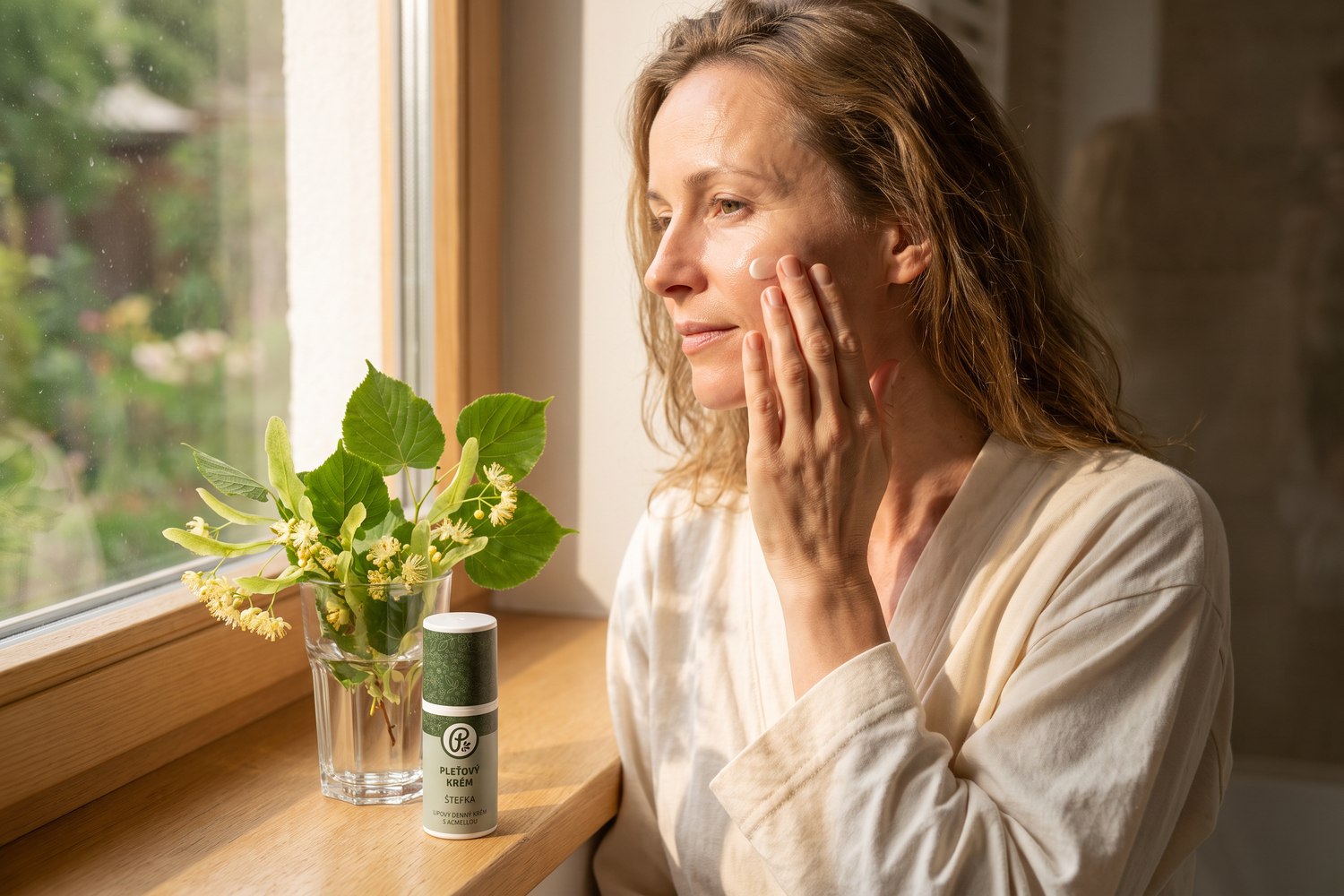
The order of steps is simple, yet often mixed up. Apply the cream to clean skin, ideally while it is still slightly damp from a toner or mist, because the cream helps keep the water on the surface. If you also use a serum, for example a hydrating serum with humectants, apply it before the cream, because lighter textures go under richer ones. Spread the cream with gentle movements from the centre of the face outwards and do not forget your neck. The amount needed is small; if your skin feels sticky after a few minutes, the layer was too thick. In cold, dry weather you can reach for a richer cream in the evening, in summer for a lighter one. That way your skin always finds what benefits it at that moment.
- Wash your face with a gentle cleanser.
- Apply a toner or mist.
- Add a serum, if you use one.
- Apply a thin layer of moisturising cream.
- Take a moment and let it absorb.
What to watch for and when to seek advice
A cream is a cosmetic, so it serves the look and feel of the skin, not treatment, and it cannot replace medical care. If your skin turns red, itches or burns after a new cream, stop using it and consult a doctor or dermatologist before trying again. With a new product, first do a test on a small area, for example on the forearm, and wait to see whether a reaction appears. If you are unsure, do not add several new things to your routine at once, so you know what suits you. You can also check information about composition in studies on the composition of moisturisers and in the manufacturer’s details on the label. What matters is how life with the cream goes in the long term, not the impression of the first application, so note how you feel after a week of regular use.
Did you know…
Did you know that dry skin is a skin type lacking fat and dehydrated skin is a state in which the skin lacks water, so both can appear even with oily skin?